
Faith Communities Go Green’s Education/Lifestyles Working Group, as an initiative during Climate Week, is inviting people from the community to join us for an in-person guided tour of the Gorman Heritage Farm on Sunday, 14 th June, 2026, 3 – 6 PM. We’ll end the tour with an hour of fellowship over a potluck picnic.
The Education/Lifestyles Working Group educates and inspires members of the various faith and civic communities to change their lifestyles, whether by taking small steps or big, to reduce our individual and collective carbon footprint and collectively help our planet to become healthier and more sustainable.
The mission of Gorman Heritage Farm aligns with our values and the work we do. This farm is a non-profit working and educational farm with the mission to cultivate a healthy community through farm-based education and experiences about food, sustainable agriculture, and the natural world.
On our guided tour of the Farm, a paved loop of half a mile, our group will be led by a trained GHF Educator in activities such as planting a seed, tasting fresh vegetables from the garden, and meeting and petting farm animals. This tour is designed to give an overview of what happens at Gorman Heritage Farm while keeping our group moving and interacting with animals, gardens, history, and stories. Attending this event helps to support the farm to continue its mission and helps us all get a deeper appreciation of nature and the crucial role it plays in our daily lives.
Please click here to reserve your place in this guided tour: REGISTER
We will only be able to accommodate 50 people, so register soon. This event is especially kid-friendly. The paved path is wheelchair friendly, but the Farm does not have any wheelchair, so if you need one, please bring your own.
The Gorman Heritage Farm, founded in 1835, was once a family-owned farm, passed down through many generations of the Brown-Gorman Family. In 1996, the last remaining members of the immediate Gorman Family, Jim and Dorothy, passed the farm onto the community to remain an educational farm, leaving a legacy of teaching community members of all ages about where their food comes from. The farm has 122 acres filled with picturesque gardens, historic buildings, crop fields, and forested hiking trails.
GHF hosts annual events such as May Farm Fest in the spring, and the Sunflower Festival in the farm. They serve many schools with both Field Trips to the farm as well as Farm to Community programs bringing the farm directly to students in their classrooms. Families visiting the farm can explore on their own, or attend special programs about gardens, farm animals, and more. As a working farm, GHF grows almost 12,000 pounds of produce in the Market Garden annually, most of which goes to the CSA, or Community Supported Agriculture – a produce subscription that is purchased by community members in shares. Fresh and dried flower bouquets and farm-fresh eggs, meat, and honey can be purchased inside the Farm Shop as well.
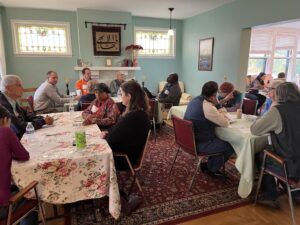 The topic we chose was the Covenant which happens to be a central feature of the Baha’i Faith. We asked everyone to share their understanding of the covenant which their Prophet had made with God: what does it mean to you? For Baha’is all covenants have two parts. The Greater Covenant is about the unchanging spiritual principles common among all faiths, exemplified by such words as, “Do unto others as you would have them do unto you.” Lesser Covenants are about each Prophet’s changes in calendars, diets, marriage and divorce, and other social details of the times in which They had lived. I learned from speaking with several Christians that the covenant isn’t as prominent in their teachings.
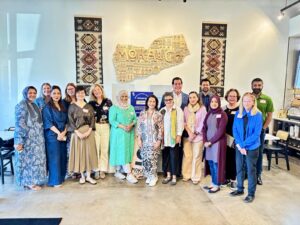 Another attendee added,“With Empowering Spaces, Shakila and Samina are building more than a program—they are building bridges. This initiative celebrates the rich tapestry of cultures that shape our communities and brings every resident into conversation; learning, growing, and connecting. When we truly understand one another’s stories, we empower our place that we call home.”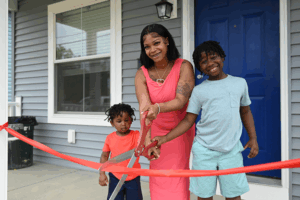
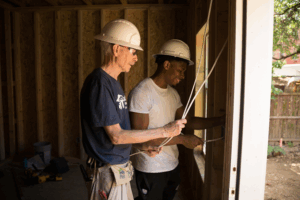 Beyond new home construction, Habitat also supports our community through our Critical Home Repair programs; an effort to ensure that seniors & veterans can continue to reside safely in their homes and their communities especially as they age. Through these programs, essential repairs such as accessibility modifications, roof replacements, and plumbing fixes help individuals maintain safe, stable housing.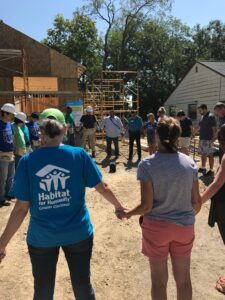
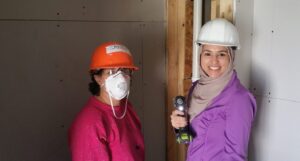 about our mission. If you’re part of a congregation interested in collaborating with Habitat, we’d love to connect and explore opportunities to work together.
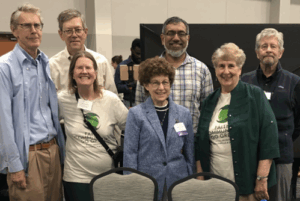 The Green Cincinnati Plan Seeds of Change Grant Program’s Spring 2025 Open Call round received more than 4 times the number of requests than funding available. Faith Communities Go Green’s proposal, regarded highly by the review committee, has been awarded Full grant funding.
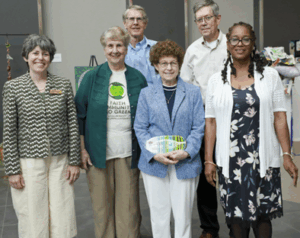 Joanne Gerson has dedicated her life to environmental stewardship, inspired by the Jewish principles of Tikkun Olam—repairing the world—and a deep belief in interfaith collaboration for the common good. As Founder and Co-Chair of Faith Communities Go Green (FCGG), Joanne has galvanized over 100 faith communities across Greater Cincinnati to take meaningful climate action through energy efficiency, education, and civic engagement. Her leadership has been instrumental in launching FCGG’s four working groups—Education & Lifestyles, Facilities, Advocacy, and Member Engagement. Among these efforts, she co-leads an Energy Efficiency Initiative that helps houses of worship lower their utility bills and drive community resilience.
 explores the past, present, and future of our foodshed, blending original artwork, storymaps, timelines, historical insights, and community-driven research, all wrapped into a beautiful coffee table book. This project celebrates the people, innovations, and businesses that have shaped our regional, national, and international food landscape. As a collaborative endeavor, the stories shared highlight the farmers, gardeners, chefs, policy makers, advocates, non-profits, and educational institutions working to create a more just and sustainable food system.
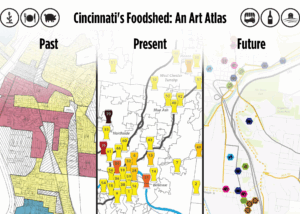 The Atlas is composed of three main sections – past, present, & future. The past illuminates the First American Nations and European settlers, showcasing indigenous knowledge, the impacts of the African Plant Diaspora and the introduction of European style agricultural. Gain an appreciation for how geography and innovation helped Cincinnati rise as the “Queen of the West,” building on the Shakers’ agricultural advances, the creation of the Poland-China Pig Breed, invention of the disassembly line, growth of pork packing, founding of Procter & Gamble, and our region’s early leadership in viticulture and beekeeping. Cincinnati birthed several impressive food empires and related business – from Kroger, Castellini and Kahn’s, to Fleischmann’s Yeast, and our confectionary, dairy, and brewery industries including United Dairy Farmers, Greaters Ice Cream, Cincinnati style chili, Christian Moerlein and La Roses Pizza to name a few.